We´ve all heart someone say they´re “dying of a broken heart”. Most of the time, it´s just a figure of speech. However, modern medicine shows that intense emotional stress can, in fact, have real and measurable effects on the heart.
One condition in particular – Takotsubo cardiomyopathy, commonly known as “broken heart syndrome” – demonstrates just how closely our emotional and physical health are connected.
What is broken heart syndrome?
Broken heart syndrome is a transient cardiac condition that closely resembles a heart attack but occurs without blocked coronary arteries. Patients often experience symptoms identical to those of an acute myocardial infarction, including:
- Chest pain
- Shortness of breath
- Abnormal electrocardiogram (ECG) readings
- Elevated cardiac biomarkers
Despite these alarming signs, imaging reveals a distinctive pattern of heart dysfunction rather than permanent damage.
Why Is It Called “Takotsubo”?
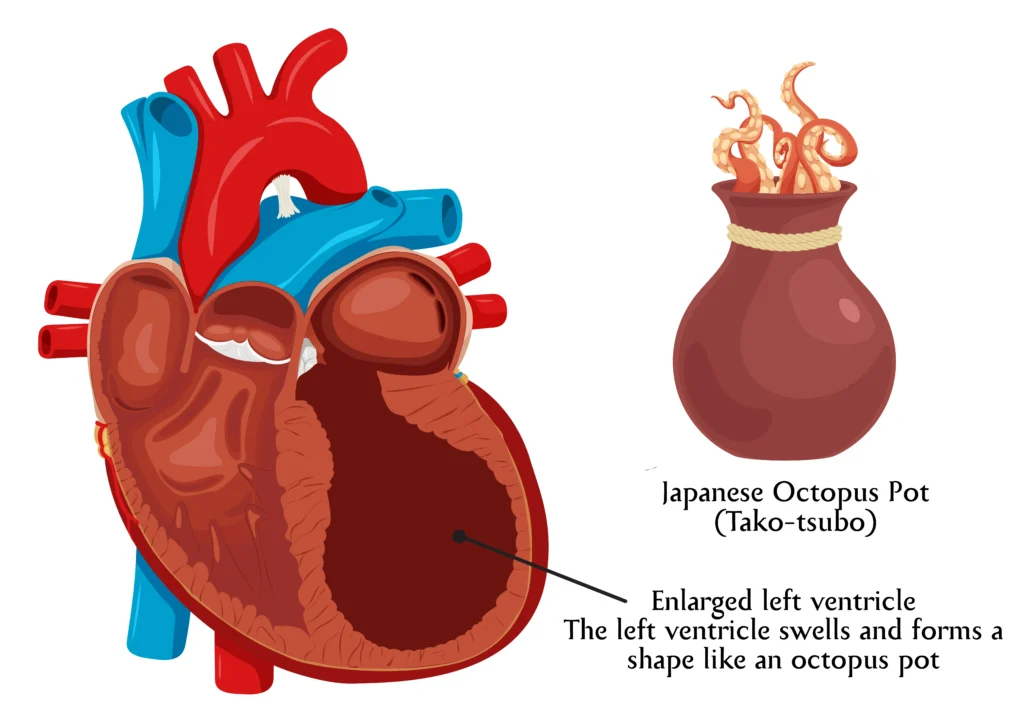
The term Takotsubo comes from Japanese and refers to a traditional octopus trap—Takotsubo pot—used by fishermen.
This pot has a round, narrow-necked shape, which closely resembles the appearance of the left ventricle in affected patients. During the acute phase of Takotsubon cardiomyopathy, the base of the heart contracts normally while the apex balloons outward, creating a silhouette strikingly similar to this vessel.
The condition was first described in Japan in the 1990s, and the name has remained due to this distinctive visual analogy.
National University Heart Centre Singapore (NUHCS). (2025). Takotsubo Cardiomyopathy. Retrieved from https://www.nuhcs.com.sg/heart-information/medical-conditions/takotsubo-cardiomyopathy
The Characteristic Cardiac Changes
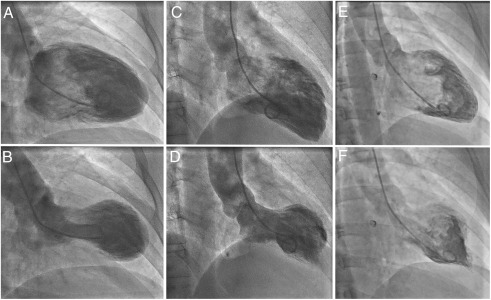
One of the defining features of Takotsubo cardiomyopathy is a temporary weakening of the left ventricle.
This often presents as apical ballooning, where the tip of the heart enlarges and loses its ability to contract effectively. Fortunately, this dysfunction is usually reversible, with most patients recovering normal heart function within days or weeks.
Aparisi, Á., & Uribarri, A. (2020). Síndrome de Takotsubo. Medicina Clínica, 155(8), 347–355.
What Causes It? The Role of Stress Hormones
The exact mechanism behind broken heart syndrome is not fully understood. However, the
leading explanation involves a surge of stress hormones—particularly catecholamines such as
adrenaline.
These hormones may affect the heart in several ways:
- Direct toxicity to heart muscle cells
- Dysfunction of small blood vessels (microvascular dysfunction)
- Abnormal constriction of coronary arteries
In essence, extreme stress can temporarily “stun” the heart.
Who Is Most at Risk?
Epidemiological data show that this condition predominantly affects postmenopausal women.
This has led researchers to suggest that estrogen may play a protective role in regulating the
cardiovascular response to stress.
Triggers are often linked to intense emotional or physical events, such as loss of a loved one, severe illness and major life shocks (negative or positive).
Possible Complications
Although the prognosis is generally favorable, broken heart syndrome is not entirely benign. Potential complications include:
- Heart failure
- Arrhythmias
- Thromboembolism
- Cardiogenic shock (in rare cases)
While mortality rates are lower than those of traditional heart attacks, they are not negligible, making proper diagnosis and monitoring essential.
Conclusion
So, can you really die of a broken heart? Not in the poetic sense—but science shows that intense emotional stress can lead to serious cardiac dysfunction.
Takotsubo cardiomyopathy stands as a powerful example of the connection between the brain, hormones, and the heart. It reminds us that emotional well-being is not just psychological—it is deeply physiological.
References
- Schweiger, V., et al. (2024). Temporal trends in Takotsubo syndrome: Results from the International Takotsubo Registry. Journal of the American College of Cardiology (JACC).
- Ravindran, J., & Brieger, D. (2024). Clinical perspectives: Takotsubo cardiomyopathy. Internal Medicine Journal.
- Rahko, P. S. (2024). Takotsubo cardiomyopathy: New insights into long-term outcomes. Journal of the American College of Cardiology (JACC).
- Arunkumar, S., & Jegaverrapandi, K. (2024). Pharmacological triggers of Takotsubo cardiomyopathy: An updated review. Current Cardiology Reviews.